
Botox For Sweat
Discover the Beauty of Renewal with Botox For Sweat. Achieve natural-looking results with no downtime.
What Is Botox for Sweat (Hyperhidrosis)?
Botox (botulinum toxin) injections are a medical treatment used to reduce excessive sweating (a condition called hyperhidrosis). It’s FDA-approved for underarm sweating and is widely used off-label for other areas, such as the palms, soles, face, and scalp.
Hyperhidrosis, commonly known as excessive sweating, can significantly impact daily activities, self-confidence, and emotional well-being. It often affects specific areas such as the underarms, palms, feet, or face and may occur without an identifiable cause.
Common Treatment Areas:
✔ Underarms (most common)
✔ Palms of hands
✔ Soles of feet
✔ Face and scalp (less common, may be more uncomfortable)
Types of Hyperhidrosis
Hyperhidrosis is generally classified into two main types:
- Primary Focal Hyperhidrosis
- This is the most common form.
- It’s localized to specific areas — most often the underarms, palms, soles of the feet, face, or head.
- It isn’t caused by another medical condition and often starts before age 25. It may have a genetic component.
- Secondary Generalized Hyperhidrosis
- This affects the entire body rather than just a focal region.
- It is caused by an underlying medical condition or medication (for example, thyroid disorders, diabetes, menopause, infections, or drugs).
How BOTOX® Stops Excessive Sweating
Step 1: Injection
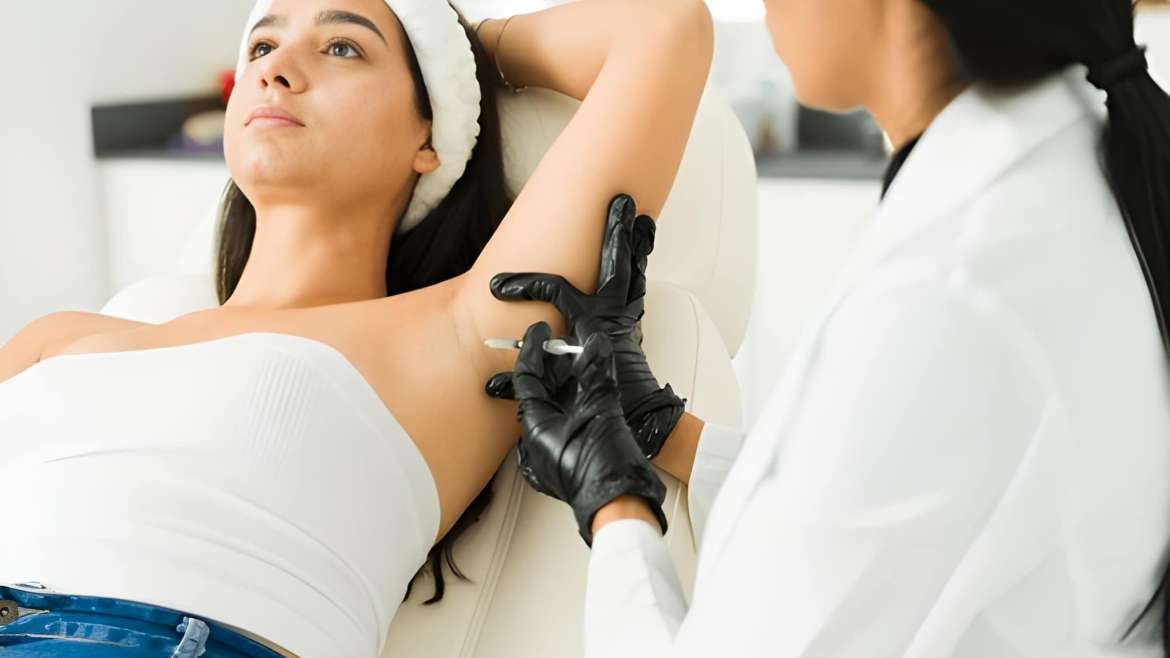
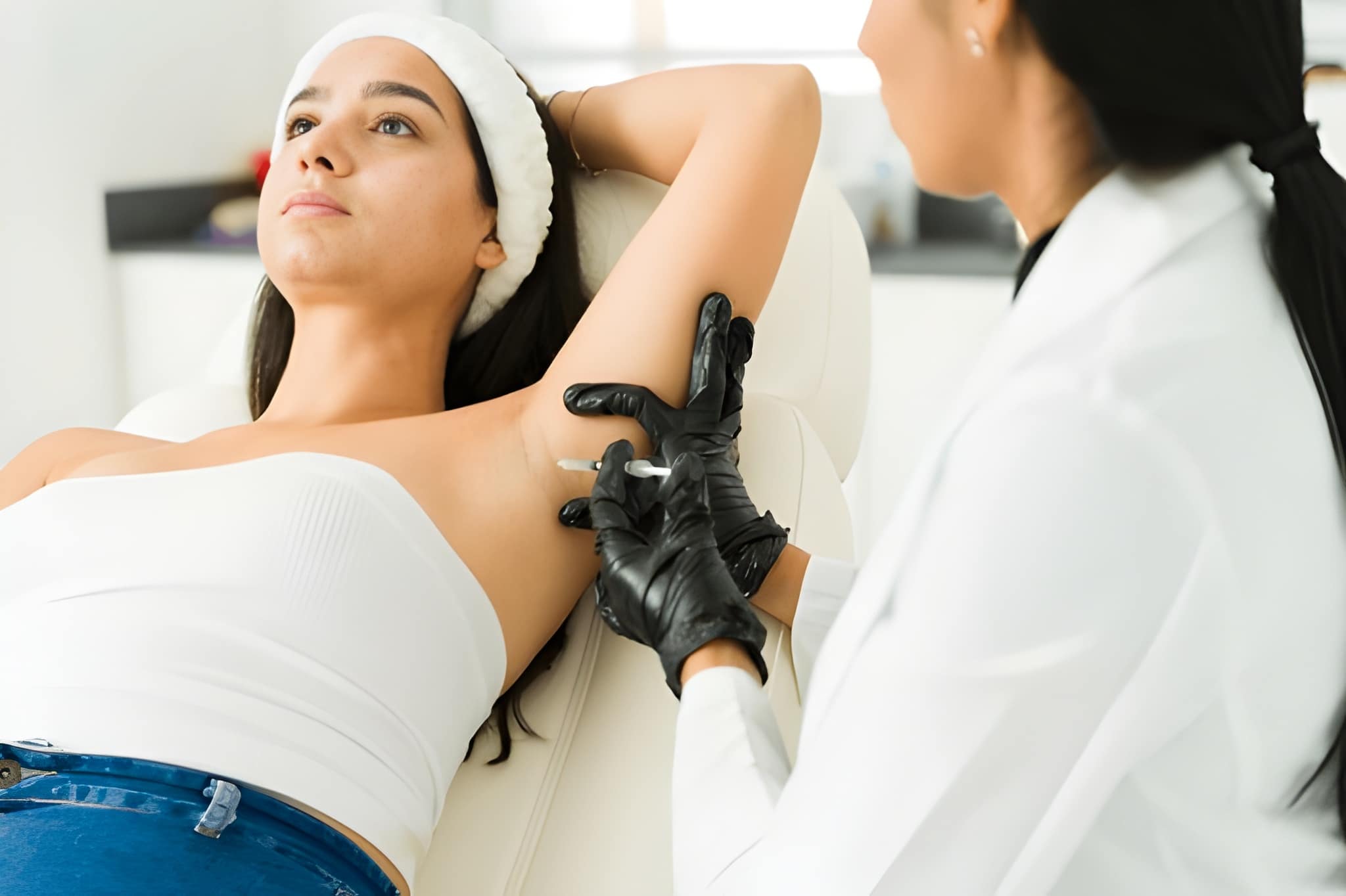
BOTOX® is injected just beneath the skin’s surface in the treatment area using a very fine needle. Multiple small injections are administered in a grid pattern to ensure complete coverage of the area.
Step 2: Nerve Blocking
BOTOX® blocks the chemical signals from nerves that activate sweat glands. Without these signals, the sweat glands in the treated area produce significantly less sweat.
Step 3: Dry Confidence
Within 2-4 weeks, you’ll notice a dramatic reduction in sweating—typically 82-87% less sweat in treated areas. Results last 4-12 months, with underarm treatments averaging 7-9 months.
Treatment Areas for Excessive Sweating
BOTOX® can effectively treat hyperhidrosis in multiple body areas. Each treatment is customized to your specific needs.
Underarms (Axillary Hyperhidrosis)
Most Popular Treatment Area
Symptoms Treated:
- Severe underarm sweating that soaks through shirts
- Constant need for clinical-strength deodorants
- Visible sweat stains on clothing
- Odor issues despite good hygiene
Treatment Details:
- Procedure Time: 20-30 minutes
- Number of Injections: 15-20 per underarm
- Pain Level: Minimal (topical numbing available)
- Results Duration: 6-12 months (average 7-9 months)
- Success Rate: 82-87% reduction in sweating
- FDA Approved: Yes, since 2004
What to Expect:
You’ll notice results within 2-4 weeks, with peak effectiveness at 4 weeks. Most patients experience nearly complete sweat reduction, allowing them to wear any clothing with confidence.
Hands (Palmar Hyperhidrosis)
Life-Changing for Social & Professional Life
Symptoms Treated:
- Constantly sweaty palms
- Avoiding handshakes
- Difficulty holding objects or using touch screens
- Paper documents becoming damp
Treatment Details:
- Procedure Time: 30-45 minutes
- Number of Injections: 50-100 per hand
- Pain Level: Moderate (nerve blocks recommended)
- Results Duration: 4-6 months
- Success Rate: 80-90% reduction in sweating
- FDA Approved: Off-label use (highly effective)
Important Considerations:
Hand treatments require more injections and can be more uncomfortable due to nerve density. We offer numbing options including nerve blocks to ensure comfort. Results are highly effective and can dramatically improve quality of life.
Feet (Plantar Hyperhidrosis)
Say Goodbye to Foot Discomfort
Symptoms Treated:
- Excessively sweaty feet
- Soggy socks throughout the day
- Foot odor issues
- Fungal infections from moisture
- Slipping in shoes
Treatment Details:
- Procedure Time: 30-45 minutes
- Number of Injections: 50-100 per foot
- Pain Level: Moderate (nerve blocks recommended)
- Results Duration: 4-6 months
- Success Rate: 75-85% reduction in sweating
- FDA Approved: Off-label use
Special Benefits:
Reducing foot sweat can prevent fungal infections, improve foot health, and eliminate the need to change socks multiple times daily.
Face & Scalp (Craniofacial Hyperhidrosis)
Specialized Treatment for Visible Areas
Symptoms Treated:
- Facial sweating (forehead, upper lip, nose)
- Scalp sweating
- Sweat dripping into eyes
- Makeup running or not staying on
Treatment Details:
- Procedure Time: 20-30 minutes
- Number of Injections: Varies by area (20-40)
- Pain Level: Minimal to moderate
- Results Duration: 4-6 months
- Success Rate: 70-85% reduction in sweating
- FDA Approved: Off-label use
Special Considerations:
Facial treatments require an experienced injector to avoid affecting facial expressions. Results can be life-changing for those who experience facial sweating in social or professional situations.
Hyperhidrosis Symptoms
The hallmark of hyperhidrosis is excessive sweating beyond what’s needed for normal body temperature regulation. Typical signs include:
✔ Very noticeable sweat even in cool conditions or when not physically active
✔ Wet, clammy hands or feet
✔ Sweat soaking through clothes
✔ Beads of sweat on the face
✔ Skin irritation, maceration (soft, soggy skin), chafing or infections in areas that stay damp
✔ Emotional and social effects such as embarrassment or avoidance of social situations due to sweating patterns
Hyperhidrosis Causes
Excessive sweating occurs when sweat glands are overactive or when your nervous system signals for sweat without typical triggers like heat or exercise.
Primary Hyperhidrosis Causes
-
The exact cause is not entirely known.
-
Often linked to an inherited overactivity of the sympathetic nervous system.
Secondary Hyperhidrosis Causes
Common triggers include:
-
Medical conditions such as hyperthyroidism, diabetes, infections, Parkinson’s disease, menopause, and heart failure.
- Medications — some antidepressants, pain drugs, antivirals, or diabetes medicines may increase sweating.
Hyperhidrosis Treatment
Treatment depends on severity and individual response
Non-invasive & First-Line
✔ Prescription antiperspirants with strong aluminum chloride
✔ Over-the-counter antiperspirants
✔ Lifestyle changes — breathable clothes, frequent changing of sweat-soaked garments
Medical Treatments
✔ Botox (botulinum toxin) injections: Blocks nerve signals to sweat glands and can reduce sweating 80-87% in treated areas. Results begin in ~2–4 days and may last 4–12+ months.
✔ Oral medications (anticholinergics) to block nerve stimulation of sweat glands (may have side effects like dry mouth).
✔ Iontophoresis: Mild electric currents to reduce sweating, mostly for hands/feet.
Minimally Invasive & Surgical
✔ Microwave therapy (e.g., miraDry) for underarms to destroy sweat glands.
✔ Sweat gland removal (surgical or laser).
✔ Sympathectomy — nerve-cutting surgery (often a last resort, due to risk of compensatory sweating).
Schedule Your Consultation Today!
Don’t wait to embrace the incredible benefits of Botox for sweat injections. Contact our Dermatology Clinic to schedule your consultation with our experienced team of dermatologists. Let us help you unveil a more youthful, confident, and radiant you!
Rediscover a clinically proven solution to control excessive sweating and restore everyday comfort.
Frequently Asked Questions
How common is hyperhidrosis?
It’s relatively common — an estimated about 3% of adults experience hyperhidrosis.
Are there any side effects of hyperhidrosis treatment
Yes—depending on the type of treatment. Most hyperhidrosis treatments are safe when performed under proper medical supervision. However, mild to moderate side effects may occur based on the chosen approach, including:
-
Antiperspirants: skin irritation
-
Oral meds: dry mouth, blurred vision
-
Botox: pain or bruising at injection sites, temporary muscle weakness
-
Iontophoresis: skin irritation or burns if not used properly
-
Surgery: compensatory sweating or other complications
How soon after treatment will I notice improvement?
Botox: many people notice reduced sweating in 2–4 days, with full effect in about 2 weeks.
Other treatments vary — from immediate changes (surgery) to several sessions (iontophoresis).
Can hyperhidrosis start at any age?
Yes, especially secondary hyperhidrosis, but primary focal hyperhidrosis often begins in childhood or adolescence.
Is hyperhidrosis considered a disability?
Hyperhidrosis isn’t typically classified as a disability medically, but it can significantly impact quality of life, social interactions, work, and emotional well-being. Some people may qualify for accommodations in work or school settings due to functional limitations.